Showing posts with label steve jobs. Show all posts

Thursday, July 2, 2015

6 Unusual Habits of Exceptionally Creative People

I expend a huge amount of my time and energy writing books and articles and working to keep my company innovative. I’ve developed an obsession with some of history’s most creative minds in the hope that I might learn some tricks to expand my own creative productivity.
Some of the things I’ve learned are more useful than others, and some are simply too weird to try.
Steve Jobs, for example, routinely sat on toilets, dangling his bare feet in the water while he came up with new ideas, and Yoshiro Nakamatsu (inventor of the floppy disc) would dive deep under water until his brain was deprived of oxygen, then write his ideas on an underwater sticky pad.
Weird ideas aside, I’ve developed a pretty good understanding of the habits of some of history’s most creative minds. There’s enough commonality between different people that I’ve distilled their habits into strategies that anyone can follow.
Six of these strategies stand out because they have the power to change the way you think about creativity. Give them a try, and you’ll reach new levels of creative productivity.
1. Wake Up Early
Not all creative minds are morning people. Franz Kafka routinely stayed up all night writing, and William Styron (author of Sophie’s Choice, among other best sellers) woke up at noon every day and considered his “morning” routine to be staying in bed for another hour to think.
However, early risers make up the clear majority of creative thinkers. The list of creative early risers ranges from Benjamin Franklin to Howard Schultz to Ernest Hemmingway, though they didn’t all wake up early for the same reasons. Ben Franklin woke up early to plan out his day, while Schultz uses the time to send motivational emails to his employees. For many creative people, waking up early is a way to avoid distractions. Ernest Hemingway woke up at 5 a.m. every day to begin writing. He said, “There is no one to disturb you and it is cool and cold and you come to your work and warm as you write.”
The trick to making getting up early stick is to do it every day and avoid naps—no matter how tired you feel. Eventually, you will start going to bed earlier to make up for the lost sleep. This can make for a couple of groggy days at first, but you’ll adjust quickly, and before you know it, you’ll join the ranks of creative early risers.
2. Exercise Frequently
There’s plenty of evidence pointing to the benefits of exercise for creativity. Feeling good physically gets you in the right mood to focus and be productive. Exercise also forces you to have disconnected time (it’s tough to text or email while working out), and this allows you to reflect on whatever it is you’re working on. In a Stanford study, 90% of people were more creative after they exercised.
It’s no surprise that so many creative and successful people built exercise into their daily routines. Kurt Vonnegut took walks into the nearby town, swam laps, and did push-ups and sit-ups, Richard Branson runs every morning, and composers Beethoven and Tchaikovsky both walked daily.
3. Stick to a Strict Schedule
It’s a common misconception that in order to be creative, one must live life on a whim with no structure and no sense of need to do anything, but the habits of highly successful and creative people suggest otherwise. In fact, most creative minds schedule their days rigorously. Psychologist William James described the impact of a schedule on creativity, saying that only by having a schedule can we “free our minds to advance to really interesting fields of action.”
4. Keep Your Day Job
Creativity flourishes when you’re creating for yourself and no one else. Creativity becomes more difficult when your livelihood depends upon what you create (and you begin to think too much about what your audience will think of your product). Perhaps this is why so many successful and creative people held on to their day jobs. Many of them, like Stephen King, who was a schoolteacher, produced their breakout (and, in King’s case, what many consider his very best) work while they still held a 9 to 5.
Day jobs provide more than the much-needed financial security to create freely. They also add structure to your day that can make your creative time a wonderful release. The list of successful, creative minds who kept their day jobs is a long one. Some notable individuals include Jacob Arabo, who started designing his own jewelry while working in a jewelry shop; William Faulkner, who worked in a power plant while writing As I Lay Dying; and musician Philip Glass, who worked as a plumber.
5. Learn to Work Anywhere, Anytime
A lot of people work in only one place, believing it’s practically impossible for them to get anything done anywhere else. Staying in one place is actually a crutch; studies show that changing environments is beneficial to productivity and creativity. E.B. White, author of Charlotte’s Web, said it well: “A writer who waits for ideal conditions under which to work will die without putting a word on paper.” The same is true for any type of creative work. If you keep waiting until you are in the perfect place at the ideal time, the time will never come.
Steve Jobs started Apple in his mom’s garage, and JK Rowling wrote the first ideas for Harry Potter on a napkin on a train. When you have a creative idea, don’t wait—put it into action as soon as you can. Recording that spark of creativity may very well be the foundation of something great.
6. Learn That Creative Blocks Are Just Procrastination
As long as your heart is still beating, you have the ability to come up with new ideas and execute them. They may not always be great ones, but the greatest enemy of creativity is inactivity.
Author Jodi Picoult summarized creative blocks perfectly: “I don’t believe in writer’s block. Think about it—when you were blocked in college and had to write a paper, didn’t it always manage to fix itself the night before the paper was due? Writer’s block is having too much time on your hands. If you have a limited amount of time to write, you just sit down and do it. You might not write well every day, but you can always edit a bad page. You can’t edit a blank page.”
Picoult’s comment describes all creative activity—the only way to stay creative is to keep moving forward.
Bringing It All Together
In my experience, you must get intentional about your creativity if you want it to flourish. Give these six strategies a try to see what they can do for you.
What habits improve your creativity? Please share your thoughts in the comments section below as I learn just as much from you as you do from me.

Monday, June 1, 2015

Apple I discarded as junk sells for $200,000; mystery woman stands to get half

MILPITAS -- It turns out that one person's junk is indeed someone else's treasure.
A South Bay recycling firm is looking for a woman who, in early April, dropped off boxes of electronics that she had cleaned out from her house after her husband died. About two weeks later, the firm, Clean Bay Area, discovered inside one of the boxes a rare find: a vintage Apple I, one of only about 200 first-generation desktop computers put together by Steve Jobs, Steve Wozniak and Ron Wayne in 1976.

The recycling firm sold the Apple I this month for $200,000 to a private collection, Vice President Victor Gichun said. And now, because company policy is to split proceeds 50-50 with the donor, he's looking for the mystery woman who refused to get a receipt or leave her name.

File: Steve Wozniak, co-founder of Apple, stands behind five Apple 1 computers for a photo op on June 18, 2013 at History San Jose.
File: Steve Wozniak, co-founder of Apple, stands behind five Apple 1 computers for a photo op on June 18, 2013 at History San Jose. (Dai Sugano)
"We are looking for her to give her $100,000," Gichun said.

She had stopped by on a Friday just before closing time.

"She said, 'I want to get rid of this stuff and clean up my garage,' " Gichun said. "I said, 'Do you need a tax receipt?' and she said, 'No, I don't need anything.' "

The company had a backup of donations, and didn't immediately go through her boxes. He feels badly because the woman said her husband had died a couple of months earlier. Gichun's own mother died at age 54, and he remembers how his father suffered afterward.

Maybe, Gichun said, having some extra cash might help the woman.

Clean Bay Area recycles computers, lab equipment, test equipment and semiconductors. It deals mostly with businesses, but about five times a week individuals stop by with donations. The company doesn't pick up from individual donors.
"I remember her," Gichun said.
He said she was driving an SUV. He's not divulging any other descriptive information about the woman or her car. In the future, he said, he'll be more insistent about getting donors' contact information.

"To prove who she is," Gichun said, "I just need to look at her."
To get her $100,000 check, the mystery woman just needs to show up at the company's warehouse at 1310 Piper Drive in Milpitas.

Friday, May 15, 2015

7 Key Strategies That You Must Learn From Apple’s Marketing

Coming off the heels of yet another successful Apple launch debut, it’s increasingly clear that Apple is on top of their game in a way like no other. Which other company could turn an ordinary press conference into a live global event?

The secret lies beyond their product line and design standards; it lies beyond even Steve Jobs’ emphatic adherence to Apple’s core philosophy, which is that the user doesn’t always know what they want.
Looking at the company’s latest product lines and revenue models, I’d be a fool to call them anything less than what they are, which is:
  • A design firm
  • A media platform
  • A publishing company
  • A software powerhouse
  • A computer builder
  • A movement
Break down each of these bullets individually and you’ll find a company at the top of their respective industry, but combine them into a single entity and you’ve got the recipe for building one of the most influential businesses of all time.

So how did they do it?

Rather than tell you how I think they did it, I thought instead I’d turn to their fans on Twitter, who helped me uncover 7 of the greatest marketing lessons that Apple brings to the table.

1. Ignore Your Critics

As an entrepreneur, you’ll hear a lot of people tell you that you need to reach out and figure out what people want, which means listening to your critics, often times more patiently than you’d like.
Apple decides to flip the script and instead focus on building what they want to build, no matter the perceived cost. When Steve Jobs debuted the iPad, the critics stood in line, throwing every insult they could muster. The critics said that the iPad would fail. The numbers say otherwise.
Each and every time Apple decided to innovate, they were laughed at. They prevailed anyway.
“Great ideas often receive violent opposition from mediocre minds.”
- Albert Einstein

2. Turn the Ordinary into Something Beautiful

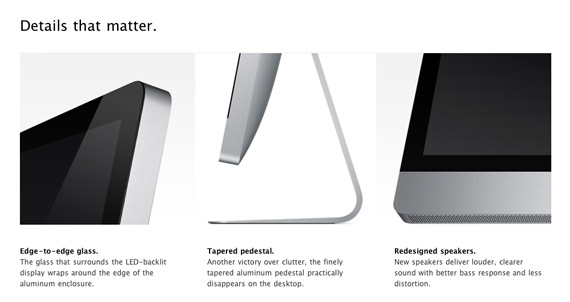
apple computer details
For quite some time, PC fans enjoyed the work of buying their own parts and building their own tower systems. At the same time, PC makers were building standard hardware for standard applications.
Apple would have none of that.
They’ve been pioneering not only the features of standard operating systems and computer systems, but simultaneously reinventing the design standards as well. As a result, we have the gorgeous iMac, the beautiful new Macbook Air, and who could forget, the amazing iPhone 4.
Where others focus on one aspect of the equation, Apple focuses on the entire product, and it shows.

3. Justify Your Price

We’re in a time when pricing strategies are all over the place. People don’t know what to charge, and in many cases, prefer to race to the bottom instead of pricing strategically to a market that can bear the cost.
Once more, Apple ignores the standard by not only pricing their technology more than 2x what their competitors charge, but doing so without blinking. How can they get away with it?
Well, the answer is twofold:
1. They build beautiful products for an audience that loves them passionately.
2. They justify their price with features and benefits that can’t be matched.
Since we’ve already hit point 1, let’s work on #2.
No other computer can match the display of a 27” iMac…it simply can’t be done.
No other software can match what iTunes brings to the table.
No laptop is as thin as the Macbook Air.
No software is more intuitive, no product more valuable than the Apple product. Any other smartphone looks like it was developed by rookies when compared to an iPhone 4. You simply cannot compare the two.
Critics will play on the fact that the core features are the same, and they might be, but that’s not the point. The point is that Apple is the Rolls Royce of the technology and design world, and their customers will gladly pay a premium because of it.

4. Communicate in the Language of Your Audience

It makes no sense to talk about things like megabytes, gigahertz, and processing power to customers that simply don’t care about technical jargon.
Take a look at any Apple product page and you’ll find that though they do discuss product specifications and technical information, it’s hidden behind the benefits that their audience is truly after.
Instead of display resolution, you’ll see phrases like “edge to edge glass,” “retina display,” and “LED backlighting.”
Sure, the jargon is there for those that need it, but it’s presented in a way that makes you want to learn about megapixels, rather than shy away from them. The art is in the copy, not in the features.

5. Extend the Experience

Have you ever heard of an unboxing? I hadn’t either until recently, when I learned that not only was I not the only one keeping Apple packaging post-sale, but that there are legions of people that record the actual process of unwrapping their newly purchased Apple products.
Do a search on YouTube and you’ll find hundreds of Apple unboxings, each from different users from across the globe. It’s pretty crazy right?
No one tells these people to video their experience, but they do it because the process is so Zen that you can’t help not to.
Apple does this by making sure that the experience doesn’t end at the cash register. They take great care in designing a user experience from browsing to unwrapping, which relies on incredible packaging and installation procedures.
By reducing installation to the lowest common denominator, they make buying new products a snap, and by spending as much time on designing packaging as they do on the products themselves, they’ve ensured that the box matches what’s inside.
As a result, they’ve built an experience that is nearly impossible to match.

6. Build a Tribe

It’s no secret that Apple has built one of the most hardcore fan bases of any product and of any time. There’s a reason they’re called “fanboys.”
But who cares, right? Most of the chatter is out of jealousy more than anything, but Apple doesn’t really care. They know that they serve an elite audience, and rather than back away from that fact, they embrace it.

7. Become “The Name”

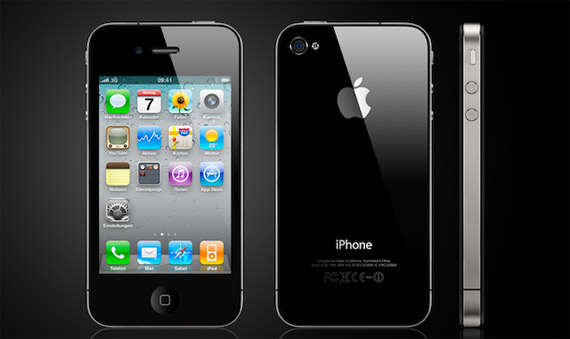
apple iphone 4
You don’t buy tissues, you buy Kleenex.
You don’t buy MP3 players, you buy an iPod.
You don’t buy a smartphone, you buy an iPhone.
Have you noticed what they’re doing here? Apple isn’t content with being a leader in sales alone, they want to own the market itself, which explains why they’ve engineered iTunes as the major music provider that it is, and why the iPad, having the luxury of being the first, has now set the trend for future tablet devices.
From here on out, everything will be compared to the iPad, iPhone, iPod, and iTunes. Sadly, this sort of thing is tough to duplicate, but it’s not impossible. You need to have one of two things:
1. A clear head start in terms of being first to market.
2. A USP that differentiates your product in a way that makes people wish it were first.
The iPhone wasn’t the first phone, but they engineered it to be so unique that you couldn’t help but think it was. The iMac isn’t the first all in one, but it became the only one that mattered.
It’s not so much the marketing angle that matters as it is the way that people identify with that angle. Take a look at any Steve Jobs product release and you’ll watch as he tells you why every other product in the market pales in comparison to what he’s created.
You know what? We believe him.
About the Author: Nathan Hangen is the co-founder of Virtuous Giant, creator of IgnitionDeck, a crowdfunding plugin for WordPress. You can follow him on Twitter via @nhangen.