Monday, June 1, 2015

Apple I discarded as junk sells for $200,000; mystery woman stands to get half

MILPITAS -- It turns out that one person's junk is indeed someone else's treasure.
A South Bay recycling firm is looking for a woman who, in early April, dropped off boxes of electronics that she had cleaned out from her house after her husband died. About two weeks later, the firm, Clean Bay Area, discovered inside one of the boxes a rare find: a vintage Apple I, one of only about 200 first-generation desktop computers put together by Steve Jobs, Steve Wozniak and Ron Wayne in 1976.

The recycling firm sold the Apple I this month for $200,000 to a private collection, Vice President Victor Gichun said. And now, because company policy is to split proceeds 50-50 with the donor, he's looking for the mystery woman who refused to get a receipt or leave her name.

File: Steve Wozniak, co-founder of Apple, stands behind five Apple 1 computers for a photo op on June 18, 2013 at History San Jose.
File: Steve Wozniak, co-founder of Apple, stands behind five Apple 1 computers for a photo op on June 18, 2013 at History San Jose. (Dai Sugano)
"We are looking for her to give her $100,000," Gichun said.

She had stopped by on a Friday just before closing time.

"She said, 'I want to get rid of this stuff and clean up my garage,' " Gichun said. "I said, 'Do you need a tax receipt?' and she said, 'No, I don't need anything.' "

The company had a backup of donations, and didn't immediately go through her boxes. He feels badly because the woman said her husband had died a couple of months earlier. Gichun's own mother died at age 54, and he remembers how his father suffered afterward.

Maybe, Gichun said, having some extra cash might help the woman.

Clean Bay Area recycles computers, lab equipment, test equipment and semiconductors. It deals mostly with businesses, but about five times a week individuals stop by with donations. The company doesn't pick up from individual donors.
"I remember her," Gichun said.
He said she was driving an SUV. He's not divulging any other descriptive information about the woman or her car. In the future, he said, he'll be more insistent about getting donors' contact information.

"To prove who she is," Gichun said, "I just need to look at her."
To get her $100,000 check, the mystery woman just needs to show up at the company's warehouse at 1310 Piper Drive in Milpitas.

The Moment I Realized I Hate My Job

Dear Liz,
I'm an avid follower of yours although I admit that the first time I read one of your stories, I thought "That's a pie in the sky outlook." Now that I've read at least fifty of your columns, my viewpoint has shifted. Now I know what you mean when you say that we can take control of our own careers, if we are willing to. 
I work for a large consumer packaged goods company. I've been here for five years, since I finished my MBA. I work incredibly long hours. The work is fine. It's very quantitative - we are a food company but our conversations revolve around market segments, launch schedules and pricing models.
Our group is on the hook to increase sales and margins every quarter. We fight our competitors every day for market share. It is a brutal business but I have done well in it. I've been promoted twice in five years.
My wife has been asking me if I'm happy working so hard and with so little time off. I've been saying "Yes, yes, I'm fine" for two or three years. Last Friday I had an "Aha!" that woke me up. We just launched a new snack food line that is going to be very popular but that requires a special fixture in retail stores.
Getting the new fixtures from our supplier has been the biggest headache in launching the product. We still have thousands of fixtures on backorder. I was able to make some short-term adjustments to our standard vendor payment terms and make other adjustments to get our supplier to hurry up with our back-ordered fixtures.
Toward the end of the day Friday I came out of a meeting where we had been allocating the scarce supply of shippable fixtures. I got in the elevator. Our division president was in the elevator. I don't really know him. His name is Blake. He is my boss's boss's boss.
Blake doesn't know me personally but he knows I work for him. He knows my face. He asked "Got any good news on those fixtures?" and I said "Yes! We're already past the worst of it. We can ship half of the back-ordered fixtures this week and the other half next week." That was good news. It was a breakthrough. The day before we hadn't had any idea when the fixture crisis might be resolved.
Blake said "Make it happen. Your job depends on it." He didn't even look at me. He looked at the elevator doors. I was stunned. I thought "What an a**hole!" Blake threatened my job to motivate me, in case I need that kind of motivation. Then he didn't say another word until the elevator reached his floor. He got out of the elevator silently.
I went to see my boss, Rachel. I told her what Blake said. "Just ignore him," said Rachel. "He's all bluster. He doesn't even know your name. He's already forgotten the conversation. Besides, if he had it in for you I would protect you."
I just stared at her. I appreciated her concern for me, but I am a thirty-six-year-old adult with a child of my own. I don't need my boss's protection. I don't want to work in a place where people say "I'll protect you from our boss" or where they say "Your job depends on it." It's so sick and wrong. 
That was my wake-up call. I'm done giving every brain cell and waking minute to a company that doesn't value me in the slightest. I'm nothing to the people who make the decisions here. Blake showed me his true colors and Rachel did, too. They are both part of the problem.
Rachel is a sweetheart but a nice boss who offers to protect people from fearful bullies doesn't make the wrong company worth working for.
Now I don't know what to do. I know that I have to leave this job, and I have to decide what I want to do next. I want to branch out and work in a different industry. I'm not sure how to begin my research. I want to work in a place where the people care about something besides making more money.
I am tired of empty suits, back-stabbers and the Money First mentality. I feel like an idiot for wasting so much time on this hamster wheel. How do you recommend that I begin my career change process?
Thanks,
Noel
Dear Noel,
Congratulations on your great awakening! It can feel like a shock to the body when the message "You are wasting your time and your talents in this job" is delivered.
It can knock you for a loop in a big way, but as you have already discovered, the nudge you got in the elevator pushed you back on your path. It was a tough message to receive, but a blessing all the same.
Don't feel bad about your time on the hamster wheel. You learned a ton on the wheel and gained muscles and credibility that will give you lots of latitude as you make your next move. Lots of organizations and causes can benefit from what you know about audiences and market share and pricing models.
You have more to offer the world than a tasty new snack treat (not that there's anything wrong with snacks)! Your job now is to listen to your own heart and mind. What are your dreams? What do you love to do and know you're good at? Start with your mission and your passion. Then ask "Whose pain can I solve doing what I love to do?"
God Bless Blake, a great teacher, for showing you who he is. Don't waste your emotional energy holding any anger toward him. He isn't worthy of your anger, Noel. Poor Blake is mostly suit and hot air.
Who knows how far down below the surface the real guy is buried or whether he will ever emerge? Blake has nothing to do with you. He did his job. He reminded you that life is not forever and that you get to decide how to spend every second of it, and also must decide.
We all announce our priorities and re-commit to them every day. We demonstrate what we care about through our investment of our most precious resource -- our time. 
Now that you have zoomed up in altitude, don't put yourself in a new box too fast. Don't short-circuit your reinvention by deciding what your new career will be based on strictly practical factors or worse yet, the result of any test or equation. Listen to your body, and your friends.
Give your reinvention time. It is a physical process and it has its own pace. You are lucky because you're employed.
I predict that you'll find a lighter way to do your job now: still committed, but not lost in your job description. The real Noel is in the driver's seat now!
A job that takes all our waking time is a smokescreen. We work ourselves to death as a hedge against having to look in the mirror. If we are always working we never have to stop and look. Most people don't dare ask "What do I want in my career?". Instead, they say:
  • Why think about that? I have a job. I guess it's good enough.
  • I can't think about change! I have a mortgage to pay.
  • It's not important to do work I enjoy. It's just my job. So what?
  • It's not my fault I have this stupid job. The deck is stacked against me.
  • You don't understand what I'm up against. I don't have a lot of choices.
Deciding that you deserve to have the life and career you want is the biggest step, and that step is already behind you. Relax! Work in the garden and ride your bike. Dance to the radio and get a journal. Your reinvention will unfold. Enjoy the ride!
All the best,
Liz

Questions and Answers

Is Noel going to quit his job?
That's the plan, but Noel is going to launch a stealth (under-the-radar) job search while he's still got his current job. Noel is going to cast a wide net. He's going to explore lots of different options. This is his big chance to find the career path that will grow his flame!
I'm in the same situation as Noel. What should I do?
Get a journal and write in it every day or as often as you can. Get together with your  friends. Don't make a quick job change just to get away from your current situation -- that could take you from the frying pan straight into the fire.

Wednesday, May 20, 2015

Inbound Unwound - Marketing Insights

Inbound marketing metrics are fantastic – but only if you take action on your findings. If you simply track for the sake of tracking and never make any adjustments to your program, do anything different or try anything new, you’re never going to realize the full potential of your inbound program.
One of the major advantages of inbound marketing is that you're able to identify what is and isn't working right now, implement adjustments to the program today and see the results tomorrow.
It's not that you’ll be 100% sure your adjustments worked, as you might need a week or month to really let your experiments run their course. But, you should get at least an indication that the results are moving in the right direction.
Specifically, consider the following workflow:
  1. Review your results daily, weekly and monthly.
  2. Analyze the data and make sure that you understand exactly what’s working like you expected and what’s not.
  3. Respond with a set of program improvements or adjustments and a set of experiments or tests designed to push the results up and to the right.
  4. Take action by installing or implementing the responses you’ve created in the Respond stage.
Then, make sure you set up the rhythms you need to keep this process going on a monthly basis, at a minimum. Here are some other considerations to make sure you take action based onmarketing metrics.

Track High-Level Performance Daily

If you’re not looking at high-level performance data daily, you’re missing the opportunity to make more course corrections more frequently. Today’s inbound marketing optimization tools come with smartphone and tablet apps that make checking the data easy – no matter where you are in the world. A quick check on visitors, conversions and leads reveals how you’re tracking versus last month or versus your goals.
If this data is down and you don’t have tactical plans to increase the numbers, you need to get a plan up and running pretty quickly. Data without action is just data.
For instance, if visitor traffic is down, you have to step up your "get found" tactics, like blogging, guest blogging, social media, email marketing and influencer outreach. If leads are not doing well, you need to step up your on-site content creation or conversion optimization efforts, or you have to make a few website upgrades to turn those visitors into leads. Almost all of these tactics can be acted upon in a matter of days, not weeks or months like some of the old, traditional marketing tactics.

Spend An Hour Each Month Digging Into The Data

There are going to be some numbers that require more thought and analysis. Schedule time – at least an hour per month – to go deep into the numbers. Look at your social reach and landing page conversion rates. These are two areas where you can see which social sites are working and which ones are lagging.
Review all of your landing pages for those that are outperforming benchmarks and those that are not. If you find pages that are underperforming, get to work making minor adjustments. Tweak the copy, add a different image or shorten the number of form fields. All of these adjustments take mere minutes, and the impact can be significant. 

Always Create An Action Plan

Once you see what’s working and what could be working better, you should take action. The action plan is the most important aspect of inbound optimization. It's the key. Create a list of 5-10 action steps, assign them to key team members, set timelines and deadlines, make sure you get an update on when the changes have been implemented and keep an eye on the metrics in real time. You should see improvements in just a matter of days – assuming the adjustments are effective, of course.
If these adjustments don’t bring about the lift you’re looking for, just rinse and repeat. Don’t be afraid to make mistakes, and don’t get discouraged if your planned improvements don’t deliver the first time. Making mistakes shows you what NOT to do again. You learn almost as much from what doesn’t work as you do from what does.
Once you get into the rhythm of Review, Analyze, Respond and Act, you’re going to start noticing a continual movement up and to the right for overall program performance. Even better, once you start to string together six, seven and eight months of this up-and-to-the-right motion, you’ll look back and see a 10x improvement in website visitors, a 5-6x improvement in leads generated and significant improvement in social reach, keyword performance and email marketing open/click-through rates.
This continuous-improvement approach is often undervalued until you look back six months and see where you were then compared to where you are today. The sooner you adopt this methodology, the sooner you start to see the results, which translates to more customers and higher revenue numbers.

Friday, May 15, 2015

7 Key Strategies That You Must Learn From Apple’s Marketing

Coming off the heels of yet another successful Apple launch debut, it’s increasingly clear that Apple is on top of their game in a way like no other. Which other company could turn an ordinary press conference into a live global event?

The secret lies beyond their product line and design standards; it lies beyond even Steve Jobs’ emphatic adherence to Apple’s core philosophy, which is that the user doesn’t always know what they want.
Looking at the company’s latest product lines and revenue models, I’d be a fool to call them anything less than what they are, which is:
  • A design firm
  • A media platform
  • A publishing company
  • A software powerhouse
  • A computer builder
  • A movement
Break down each of these bullets individually and you’ll find a company at the top of their respective industry, but combine them into a single entity and you’ve got the recipe for building one of the most influential businesses of all time.

So how did they do it?

Rather than tell you how I think they did it, I thought instead I’d turn to their fans on Twitter, who helped me uncover 7 of the greatest marketing lessons that Apple brings to the table.

1. Ignore Your Critics

As an entrepreneur, you’ll hear a lot of people tell you that you need to reach out and figure out what people want, which means listening to your critics, often times more patiently than you’d like.
Apple decides to flip the script and instead focus on building what they want to build, no matter the perceived cost. When Steve Jobs debuted the iPad, the critics stood in line, throwing every insult they could muster. The critics said that the iPad would fail. The numbers say otherwise.
Each and every time Apple decided to innovate, they were laughed at. They prevailed anyway.
“Great ideas often receive violent opposition from mediocre minds.”
- Albert Einstein

2. Turn the Ordinary into Something Beautiful

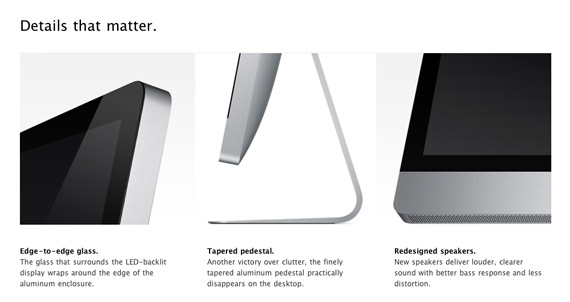
apple computer details
For quite some time, PC fans enjoyed the work of buying their own parts and building their own tower systems. At the same time, PC makers were building standard hardware for standard applications.
Apple would have none of that.
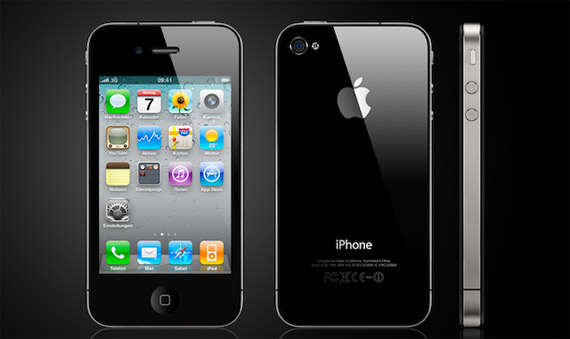
They’ve been pioneering not only the features of standard operating systems and computer systems, but simultaneously reinventing the design standards as well. As a result, we have the gorgeous iMac, the beautiful new Macbook Air, and who could forget, the amazing iPhone 4.
Where others focus on one aspect of the equation, Apple focuses on the entire product, and it shows.

3. Justify Your Price

We’re in a time when pricing strategies are all over the place. People don’t know what to charge, and in many cases, prefer to race to the bottom instead of pricing strategically to a market that can bear the cost.
Once more, Apple ignores the standard by not only pricing their technology more than 2x what their competitors charge, but doing so without blinking. How can they get away with it?
Well, the answer is twofold:
1. They build beautiful products for an audience that loves them passionately.
2. They justify their price with features and benefits that can’t be matched.
Since we’ve already hit point 1, let’s work on #2.
No other computer can match the display of a 27” iMac…it simply can’t be done.
No other software can match what iTunes brings to the table.
No laptop is as thin as the Macbook Air.
No software is more intuitive, no product more valuable than the Apple product. Any other smartphone looks like it was developed by rookies when compared to an iPhone 4. You simply cannot compare the two.
Critics will play on the fact that the core features are the same, and they might be, but that’s not the point. The point is that Apple is the Rolls Royce of the technology and design world, and their customers will gladly pay a premium because of it.

4. Communicate in the Language of Your Audience

It makes no sense to talk about things like megabytes, gigahertz, and processing power to customers that simply don’t care about technical jargon.
Take a look at any Apple product page and you’ll find that though they do discuss product specifications and technical information, it’s hidden behind the benefits that their audience is truly after.
Instead of display resolution, you’ll see phrases like “edge to edge glass,” “retina display,” and “LED backlighting.”
Sure, the jargon is there for those that need it, but it’s presented in a way that makes you want to learn about megapixels, rather than shy away from them. The art is in the copy, not in the features.

5. Extend the Experience

Have you ever heard of an unboxing? I hadn’t either until recently, when I learned that not only was I not the only one keeping Apple packaging post-sale, but that there are legions of people that record the actual process of unwrapping their newly purchased Apple products.
Do a search on YouTube and you’ll find hundreds of Apple unboxings, each from different users from across the globe. It’s pretty crazy right?
No one tells these people to video their experience, but they do it because the process is so Zen that you can’t help not to.
Apple does this by making sure that the experience doesn’t end at the cash register. They take great care in designing a user experience from browsing to unwrapping, which relies on incredible packaging and installation procedures.
By reducing installation to the lowest common denominator, they make buying new products a snap, and by spending as much time on designing packaging as they do on the products themselves, they’ve ensured that the box matches what’s inside.
As a result, they’ve built an experience that is nearly impossible to match.

6. Build a Tribe

It’s no secret that Apple has built one of the most hardcore fan bases of any product and of any time. There’s a reason they’re called “fanboys.”
But who cares, right? Most of the chatter is out of jealousy more than anything, but Apple doesn’t really care. They know that they serve an elite audience, and rather than back away from that fact, they embrace it.

7. Become “The Name”

apple iphone 4
You don’t buy tissues, you buy Kleenex.
You don’t buy MP3 players, you buy an iPod.
You don’t buy a smartphone, you buy an iPhone.
Have you noticed what they’re doing here? Apple isn’t content with being a leader in sales alone, they want to own the market itself, which explains why they’ve engineered iTunes as the major music provider that it is, and why the iPad, having the luxury of being the first, has now set the trend for future tablet devices.
From here on out, everything will be compared to the iPad, iPhone, iPod, and iTunes. Sadly, this sort of thing is tough to duplicate, but it’s not impossible. You need to have one of two things:
1. A clear head start in terms of being first to market.
2. A USP that differentiates your product in a way that makes people wish it were first.
The iPhone wasn’t the first phone, but they engineered it to be so unique that you couldn’t help but think it was. The iMac isn’t the first all in one, but it became the only one that mattered.
It’s not so much the marketing angle that matters as it is the way that people identify with that angle. Take a look at any Steve Jobs product release and you’ll watch as he tells you why every other product in the market pales in comparison to what he’s created.
You know what? We believe him.
About the Author: Nathan Hangen is the co-founder of Virtuous Giant, creator of IgnitionDeck, a crowdfunding plugin for WordPress. You can follow him on Twitter via @nhangen.

Thursday, March 5, 2015

Why Sir Ken Robinson Is My Thought-Leader Spirit Animal: 7 Important Ideas on Innovation?

Sir Ken Robinson recently presented a video talk and Q&A at MarketingProfs on the nature of innovation at our own organizations.
Why is innovation critical to all companies? And are we all capable of the creativity and imagination required to fuel real innovation? (Spoiler alert on that last one: YES.)

I’m one of those people who gets antsy at webinars. But last week I was zero percent tempted during Sir Ken’s video talk to start scrolling through my email or to check Instagram.

Part of that was Sir Ken’s delivery – he’s hilarious and articulate. Which makes the big concepts he talks about feel accessible and real and suddenly relevant to all of our lives. 

I came away from Sir Ken’s talk feeling inspired to do things differently within my own organization as well as in the world itself. And when’s the last time that you had that reaction to a marketing webinar?

Here are 7 must-read highlights.

If you’re wanting more, you can watch the whole seminar here at MarketingProfs.

“Innovation has to become a habit…. Innovation needs to be systematic, deliberate; it is what defines you as an organization."

Innovation is simply a habit that should be nurtured, not an art or a gift. In that way, it reminds me of my philosophy toward writing as a habit, not an art.
“Make innovation part of the daily conversation,” Sir Ken said.

"Innovation feeds on itself."

When the iPhone came out, in 2007, there were a few hundred apps for it. Now, there are a ka-frickin-zillion. (That’s not Sir Ken’s word, it’s mine.)

“You can now download an app that turns your iPhone into a blues harmonica,” Ken said. “Why? I have a blues harmonica that’s smaller than the iPhone…” 

The bigger point is that tools and technologies allow us to channel creativity and innovation in new, unexpected ways. “Tools stretch our minds in new directions. They allow us to do things, but also tools extend our minds.”

“Innovation feeds on itself. It becomes pat of a multiplier effect” in which things are launched that were unanticipated by the original design or intent, Sir Ken said.

"Organizations are mortal."

Organizations are mortal – most last only 30 to 40 years. And they don’t survive if they don’t evolve.

“Companies are living organisms; if they don’t evolve, they simply don’t make it. Innovation isn’t an option,” Sir Ken said.

One good example is Kodak. They invented the brownie camera, which Sir Ken called “the iPad of its day.” The Brownie camera made photography accessible to everyone, and as a result Kodak went on to be the dominant force in photography.

Now the company is in receivership. Kodak didn’t fail because people stopped taking photographs – we take more photos, not less (“an irritating number,” said Sir Ken in a mock grouse). 

Rather, Kodak failed because it didn’t adapt to a digital culture and instead bet its future on film – “when things really went quite differently, of course,” he said.

Kodak was created by chemists and run by chemists, and Sir Ken speculated that that might’ve contributed to a kind of innovation blind spot.

“Kodak created a habit of mind, a culture that stopped them from innovating,” Sir Ken said.

"The second driver of innovation is the sheer number of people on the planet."

"There are currently 7 ½ billion people in the world – more than any other time in our history. By the middle of the century, there will be an estimated 9 billion. Much of the population growth is expected to come from emerging or developing economies.

That may affect the future of your own organization. But more broadly, it’s also likely to affect our collective futures.

More people means more need for food, fuel and water. Beyond the question of whether our planet can handle the growth is the question, “In what fashion?” Sir Ken said. If we all consumed resources as most people do in India, the earth could sustain 15 billion people, he said. But if we all consume fuel, food and water as we do in North America, the earth could sustain a mere 1.5 billion. 

“Which means that by the end of the century, we’re going to need another 4 or 5 planets to accommodate us all,” Sir Ken said.

"Creativity is the applied wing of imagination."

Innovation is the drive to find new ideas and new ways of doing things, to launch both new products and better processes. “But you can’t go straight to it,” he said, because the foundation for innovation are two things: Imagination and creativity.

Imagination gives you the freedom to consider alternative views. Creativity is about applying imagination to existing systems – to challenge what we take for granted. It’s the process of figuring out if your imagined, original ideas have value.

“Creativity is the applied wing of imagination,” Sir Ken said. And innovation comes from the application of that creativity in context in an organizational context.

"Creative does not equal artistic."

“A myth is that you’re either creative or you’re not,” Sir Ken said.

“Creative” does not equal “artistic.” You can be a creative team leader or a creative scientist or a creative marketer – which means only that you look for new ways of doing things.

We all have creative capacity. But most organizations don’t give people permission to be creative.

In an organization, he added, “Culture is about where you lay the lines of permission.”

I wrote a full post on this one alone here. 

"Great ideas aren't accidental."

“Creativity is a process, not an event,” Sir Ken said
Pixar bans no or but during company meetings. Great ideas aren’t accidental – rather, they come from a practiced point of view which encourages new ideas and innovation.
Support a “yes and…” brand of improvisation at your own organization, Sir Ken said. In comic improv, the actors accept what those around them suggest and work with it – you accept what you’ve been given and build on it, saying yes and instead of no orbut. 

Banning no and but might “sound trivial,” Sir Ken said. “It’s really not.”

If you’re a creative leader, he added, it’s not your job to have all the great ideas. Instead, it’s your job to allow those you lead to contribute as well.
“Take that weight off yourself,” he said.

Wednesday, March 4, 2015

Pebble vs. Apple: David and Goliath This Ain't

By this time next week Apple will have, once again, sucked all the oxygen out of the room. Next Monday, at one of the company's time-tested high-profile events, we'll all be attending the coming out party for Apple Watch.
But this week, the smart watch news is all about Pebble, which can reasonably claim to have energized the space three years ago in a very Apple way: Exploding onto the scene with a breakthrough device someone else thought of first.
Pebble returned to Kickstarter last week in a bald attempt to capitalize on the smart watch buzz created by Apple's imminent entry into the space with Pebble Time, a sportier model with a new approach to notifications it calls Timeline. They've promised a month of news, timed to the 30-day campaign, which includes today's reveal of — surprise! — an upgrade option to Pebble Time Steel, a steal at only $80 more than the (long since taken) $170 batch (Yes, I'm in. Again).
Pebble and Apple isn't David and Goliath, at least not as far as Pebble CEO Eric Migicovsky is concerned. "Whether delusional, manically focused or simply well-rehearsed, Migicovsky chose to view the Apple announcement as a plus for Pebble," Steven Levy writes in Backchannel. 'It’s pretty incredible to see the world’s largest company come into the watch space,' he said. 'It’s validating something I’ve known for the last six and a half years — that the next generation of computing will be on your body.'"
What is undeniably true is that Pebble has sold more than one million watches in three years, and six days into a 30-day Kickstarter campaign, has sold another $14 million worth. With that, the company has re-claimed the title (it first took with the original Pebble) as the most funded Kickstarter project ever.
So, there is that.
I first took notice of Pebble in my Reuters column when they broke all records on their first Kickstarter campaign, in April 2012:
A Kickstarter project for a device you wear on your wrist, but that needs a smartphone to do anything really interesting, has raised more than $5.3 million in eight days. This is this far and away the most anyone has ever raised on Kickstarter, and it’s happening – with a gadget in a category that has a pretty dismal track record – at a sales pace that would make even Apple sit up and take notice.
As much as I like to dine out on those last words, I'm not really sure Apple did "sit up take notice" as much as it might have already been working on the idea for quite some time.
The smart watch has all the earmarks of the sort of device-that-time-forgot Apple often manages to turn into something relevant. Microsoft had tried and failed with it a decade before the first Pebble (note the similarities to the tablet, which Apple reinvented a decade after the Redmond giant tried to market its own). Various kinds of smart watch have been around ever since, getting little love. Even Pebble was going nowhere fast as a developer of a device tethered to Blackberry phones, which were about to fall off a cliff.
What changed? Two very important, intertwined things.
Smart watches were originally conceived of as stand-alone devices. The limitations are now pretty obvious, chiefly the tiny screen. Remember, though, at the time ofMicrosoft's SPOT, watch screens on mobile phones were also pretty tiny.
But they didn't do all that much. Unlike the Dick Tracy device people of a certain age remember fondly you couldn't even talk to anyone with it. I mean, we KNEW that watches were communications devices in the early 1960s. So why aren't they in the year 2002?!
Apple went a long way towards setting the stage for the emergence of the smart phone as must-have mobile device in 2007, with the first iPhone. Among the new features was a ginormous screen, which made activities like web surfing credible on a mobile device. So successful was the smart phone that it created a new version of a problem futurist Alvin Toffler had identified in 1970: information overload. Hard core techies, like Gigaom's Mathew Ingram, would soon argue that you should choose a smart phone based on how well they wrangled notifications above all other features.
And that was the new opening for the resurgence of the smart watch. The trick, from my perspective, is to avoid mission creep. It is to remember that the opportunity lies in extending the utility of the smart phone, not replacing it.
But the existential question about whether smart watches are a mainstream consumer item is valid. Notification management is pretty hard core. One new use case: There are unique health monitoring opportunities for something strapped to your wrist. Pebble steals a little of that thunder today — surprise! — with a reveal that of the smartstrap: "straps can now contain electronics and sensors to interface directly with apps running on Pebble Time."
Apple may bury Pebble, or its entry into the smart watch space might lift all boats — even Android, whose fans will tell you already boasts a range of excellent choices with features Apple will reinvent, or steal, depending on your point of view.
So, for a smart watch aficionado these are exciting times. If Apple is wildly successful, look to them to even extend coverage to Android devices, like iTunes spread to Windows. Apple's entry is a make-or-break event which will answer whether there is a massive, pent-up hunger for this kind of device, or whether it's only a play thing for people like me.
Either way, it's about time.

Wednesday, February 18, 2015

7 Lies Employers Use To Trick You Into Working For Them

I got this letter from a LinkedIn reader:
Dear J.T.,
Why do employers lie to get you to take the job? The last two companies I've worked for have done the same thing. They promise me things, but once I'm in the job, they don't deliver. I'm tired of getting taken advantage of and don't now how to make it stop. What am I doing wrong?
This happens a lot. And frankly, it's going to get even worse as the talent shortage increases and companies play dirty to get candidates to take their jobs. Here's an article which explains this growing trend...
Why Some Employers Have Rose-Colored Recruiting Glasses
While some employers are starting to properly reveal their Employment Brands, it could take a while for others to recognize the need to accurately convey what it's like to work for their company - and that will hurt their ability to hire effectively.
For example...
Companies that pull the bait-n-switch (like what the poor professional experienced above), are usually desperate to improve their troubled company - and assume hiring new talent will fix their problem. They make promises to themselves, "If we can just get the best talent in here and turn things around, we can actually make good on all these promises we're making while recruiting them." In their minds, hiring you will give them the results they need to make those promises a reality. Unfortunately, hiring alone can't fix a failing company or a broken corporate culture. Before you know it, the company is making excuses why they won't deliver on those promises - and may even try to make you feel bad for asking. As if it was your fault!? Sound familiar?
7 Potential Lies Told In The Hiring Process
Any time a company makes the following claims, you should push back and try to get more information before assuming it's the truth. While some can deliver, others can't - and it's up to you to figure out which ones are sincere. The potential lies are:
  1. There's a lot of opportunity for advancement.
  2. The bonus structure will double your income.
  3. Your territory is protected and we won't change it.
  4. You'll get extensive training.
  5. You'll have scheduling flexibility and can work from home on occasion.
  6. We'll hire you some help when it gets busy.
  7. Once you fix this problem/department/project, etc., you'll get to work on something new and exciting.
In order to avoid being taken advantage of, the secret is to learn to master the very same technique recruiters have been taught to spot a fake in an interview.
Use "Reverse Behavioral Interviewing" To Reveal Employer's True Self
Behavioral interviewing is a technique recruiters use to help determine the personality, aptitude, and true experience level of a candidate. They're historically open-ended questions designed to force candidates to provide more detailed answers to questions that address things like their:
  • ability to work in teams
  • work style
  • track record of success
  • ability to overcome adversity
  • capacity to cope with change
Recruiters use behavioral interviewing to explore candidates' depth of knowledge and ability to answer the questions in a way that matches the goals, values, and needs of the organization. [A free tool with some of the most common behavioral interview questions can be found here.]
They're also trying to identify and eliminate any liars, under-performers, or high-maintenance candidates. Hiring is expensive. Behavioral interviewing is meant to help minimize bad hires.
What If You Could Do The Same?
You can!
When your turn comes to ask questions in the interview (usually, at the end of the conversation), you can prepare a list of open-ended behavioral questions that will force the employer to articulate more clearly how they deliver on the promises they're making. For example, check these seven questions as they relate to the potential lies above:
  1. Can you give me an example of someone who was hired in the last two years to a similar role who has already advanced in their career here? In particular, can you explain what they did to make that happen?
  2. Can I meet someone in the company who has doubled their income with the bonus structure? I'd like to learn more about how they accomplished that.
  3. I know territories can change as the business changes, what do you put into place to ensure this never happens? Is there a written legal contact of some sort?
  4. Can you break down the formal training versus the informal training I will receive? And, may I speak to someone who has been in this role a year to see how they best used the training to their advantage?
  5. What is the procedure for requesting to work from home? Can I speak to someone who uses this scheduling flexibility so I can learn what he/she is doing to make sure she is meeting the company's goals when working remotely?
  6. Can you share with me a recent example of someone who was hired on to help due to growth. What is the company's process for identifying and funding additional headcount?
  7. Can you share with me a recent example of someone who was hired on to fix a problem and has now gone on to a new project? What did they do to ensure they were given the opportunity to move on?
Each of the questions above are positively framed to show your sincere interest in the company's approach to delivering on these promises. It's up to them to give you an answer that sounds accurate and compelling. If they start to dance around the subject, or don't have a clear cut answer, you know they aren't telling the truth.
Difference Between Working "For" An Employer & Working "With" Them
Learning how to reverse behavioral interview a potential employer is a very important step in becoming a more sophisticated and successful job seeker. When you realize you want to work "with" employers and not "for" them, you can begin to approach the job search with your eyes wide open. You deserve the best opportunities, and that means improving your interview skills so you can spot the less-than-ideal employers. Use the technique above to help you get better at finding the right fit for you!